- Climate and Weather: Since Bali is so close to the equator, it is mostly tropical, warm and humid all year around. There are two main seasons: Dry Season (April – September, with July and August being high season) and Rainy Season (October – March). However even during Dry Season, there could be some cloudy / rainy days (or entire weeks). Also, daylight is typically between ~6:30AM and ~6:30PM so plan activities accordingly.
- Recommended Time in Bali: I would say at least 1 week. I did 2 weeks, but I could have easily done another 2 weeks to see the rest of the island and visit the nearby ones.
- Accommodation and Location: Again tough to say as it depends on personal preferences. There are super cheap hostels (~$5 / night), affordable hotels (I stayed in central Ubud with a rooftop infinity pool for $30 / night), and lavish resorts ($400+ / night). I personally loved staying in Ubud since it was central, affordable, and surrounded by rice paddies and jungle. However for more of a beach / resort feel, then go to Seminyak, Sanur, or the southern tip of Bali. The very north and west aren’t popular destinations, but they are options for something different.
- Packing Essentials: Most of the locals are pretty covered up, but it’s fine to wear shorts / tank tops since there are so many tourists around. I’ve noticed most places are fairly casual so leave the high heels at home. I would save some room for any gifts or clothes. Below are my essentials for next time:
- Clothes / Shoes / Accessories: Summer dresses (cotton / something loose), cotton shorts (avoid jeans), loose tops, one large cotton scarf (used as a saraong / cover up), light jacket (for those cooler nights or when it rains), secure cross-body bag (see #11), comfortable sandals to walk around in (ideal if they are also waterproof for the beach), and one “nicer” outfit
- Clothes / gear for activities: Bathing suit, running / hiking / active shoes (for the hikes), yoga gear (love the yoga studios there), waterproof phone case (for snorkeling or waterfall pictures), and a headlamp (for Mt. Batur sunrise hike, though most tours will provide a flashlight)
- Other Items: Bug spray (I didn’t find the ones in Bali as effective) and mosquito bands (saved my life), activated charcoal or anything for upset stomachs, other medications (flu, cold, allergy), and sunscreen (can also buy there but saw some blogs say they aren’t as effective).
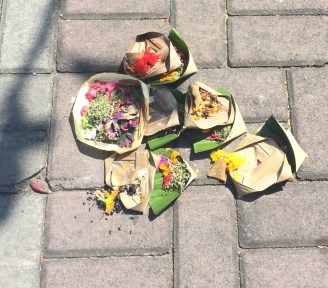
- Culture and customs: I love the culture and how friendly the Balinese people are. My volunteer coordinator told us the locals really appreciate it when tourists are friendly back so smile and say hello! However, avoid hugging and kissing in public since that is considered disrespectful. I also learned to avoid using just the left hand to wave or hand things over since it is considered rude because the locals use their left hand to clean themselves. It is respectful to use both hands to hand things over though. In Indonesia, most people are Muslim or Christian, but in Bali, the majority are Hindu. Note that many temples display a symbol resembling the swastika, but this is an ancient Hindu symbol that the Nazis adopted. Lastly, Hindus celebrate many ceremonies and sometimes the roads will be blocked during these celebrations. Might be best to just get out and walk or be very patient sitting in the traffic. Lastly, be careful and do not step on the offerings (see below), which locals place in front of their house or store in the morning and evenings.
-
- Infrastructure: People drive on the left-side of the road so make sure to look both ways before crossing. Also, it is pretty common not to have any sidewalks and to end up walking right next to cars or on unpaved roads. Unfortunately, there is also a lot of littering. I saw a lot of trash on the side of roads, in rivers, and at the beach. It’s rare to see recycling bins so most people throw everything in the same container.
- Getting around: There is no good public transportation system, hence why there are so many motorbikes and cars. There is also a fair amount of traffic during rush hour since there aren’t many lanes. The cars tend to sit in traffic, but the motorbikes are able to cut traffic. There are so many taxis, but many are unofficial so negotiate the rate before the trip or hire a driver. I’ve found the unofficial cabs would ask if I needed other trips or tours and would exchange numbers. It was easy to stick to one or gather a bunch to assess prices. Uber or GrabCar are cheaper options, but be very careful where you get in and out. There are certain areas banning Uber and GrabCar (will see signs). I’ve heard the locals / taxis would aggressively harass the Uber drivers.
- Tipping: Tipping is discretionary. I normally rounded up the bill or gave around 10%. The nicer places tend to add a service fee so double check the bill.
- Money and ATM: People told me to have rupiah before leaving the airport since most taxis / drivers only take cash. There are ATMs in the airport after exiting arrivals. The ATM machines provide the cash first so remember to grab the debit card before walking away. Another option is to bring local currency and exchange it at a money exchange shop. I saw the shops offering fair rates, but I’m not sure if there are any other fees since I didn’t use this method.
- Shopping and restaurants: The higher-end stores and restaurants normally accept credit cards. In general though, I would carry rupiah. Normally the places that do accept card will charge a ~3% fee. As for bargaining, people told me to bargain at stands, flea markets, or the Ubud Market (famous shopping area in Ubud with many stands and shops), but do so within reason. Seminyak has more of the big name brands and high-end stores compared to Sanur or Ubud. I personally preferred shopping / eating in Ubud due to the variety and better prices.
-
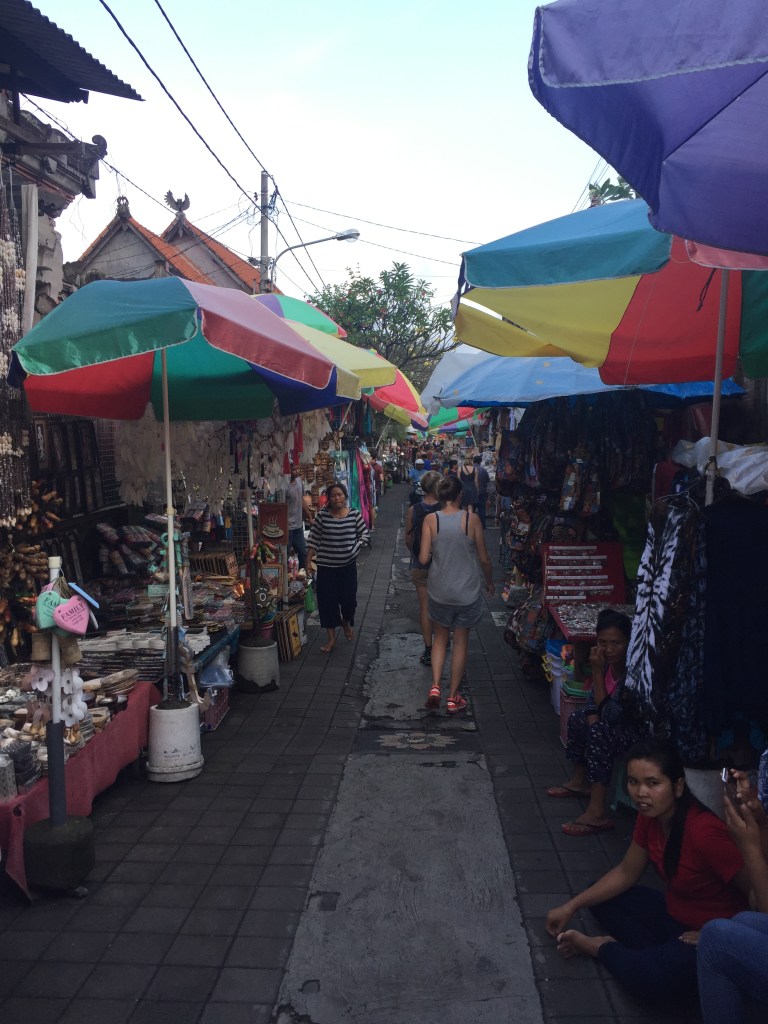
Ubud Market
-
- Safety: I felt relatively safe in the areas I stayed in, even as a solo female traveler. Although I didn’t see this personally, people told me to be careful of pick pocketing and purse snatching from motorbikes so wear a secure cross-body bag.
- WiFi: I debated whether I should get an international SIM card but heard most places have WiFi. Getting a SIM card would be useful for navigation, especially if you are renting a motorbike, but some rental stores also offer GPS navigation with the motorbikes. SIM cards can be purchased at local stores or at the airport. I heard Telkomsel has the best service. There is a Telkomsel counter located after arrivals in the international terminal, near the money exchange.
- Animals: Many owners let their dogs wander the streets, but there are a lot of strays running around. Despite my love for dogs, I would be careful playing with them since unfortunately some of the (most likely stray) dogs looked ill. Also a warning that there are roosters and they are very audible. I could sometimes hear them from my hotel in the middle of the night (nope, they don’t just crow at the crack of dawn).
- Sightseeing and Tours: Book those things when in Bali! I made some reservations online beforehand to Mt. Batur and the north, but ended up cancelling both because I found better deals during my trip. It was also nice to be able to plan a bit closer to the date since the weather can be unpredictable.
- Nearby Islands: I wish I planned a visit to the other islands like the Nusa Islands and Gili Islands. The folks who visited these islands all told me that they are a must see when visiting Bali. I’m saving these for my future trip back to Bali.
- Nusa Islands: Lembongan (attracts the surfers), Ceningan (great for cliff jumping, tiny though and great for a daytrip), and Penida (largest of the 3, good for snorkeling and manta rays).
- Gili Islands: There is Gili Air (which everyone recommended staying at since it’s nicer and quieter), Gili Trawangan (party island), and Gili Meno (where most couples go), and it’s easy to get around via water taxis.

 Across Oceans & Travels
I love Bali and have been there a few times. I prefer staying in resorts and Nusa Dua is the best place to stay for comfort, luxury and for pure relaxation. For family or central shopping areas, Ubud or Siminyak are also pretty safe areas, I supposed.
LikeLike
Thanks for the tips, will have to check out Nusa Dua soon!
LikeLiked by 1 person