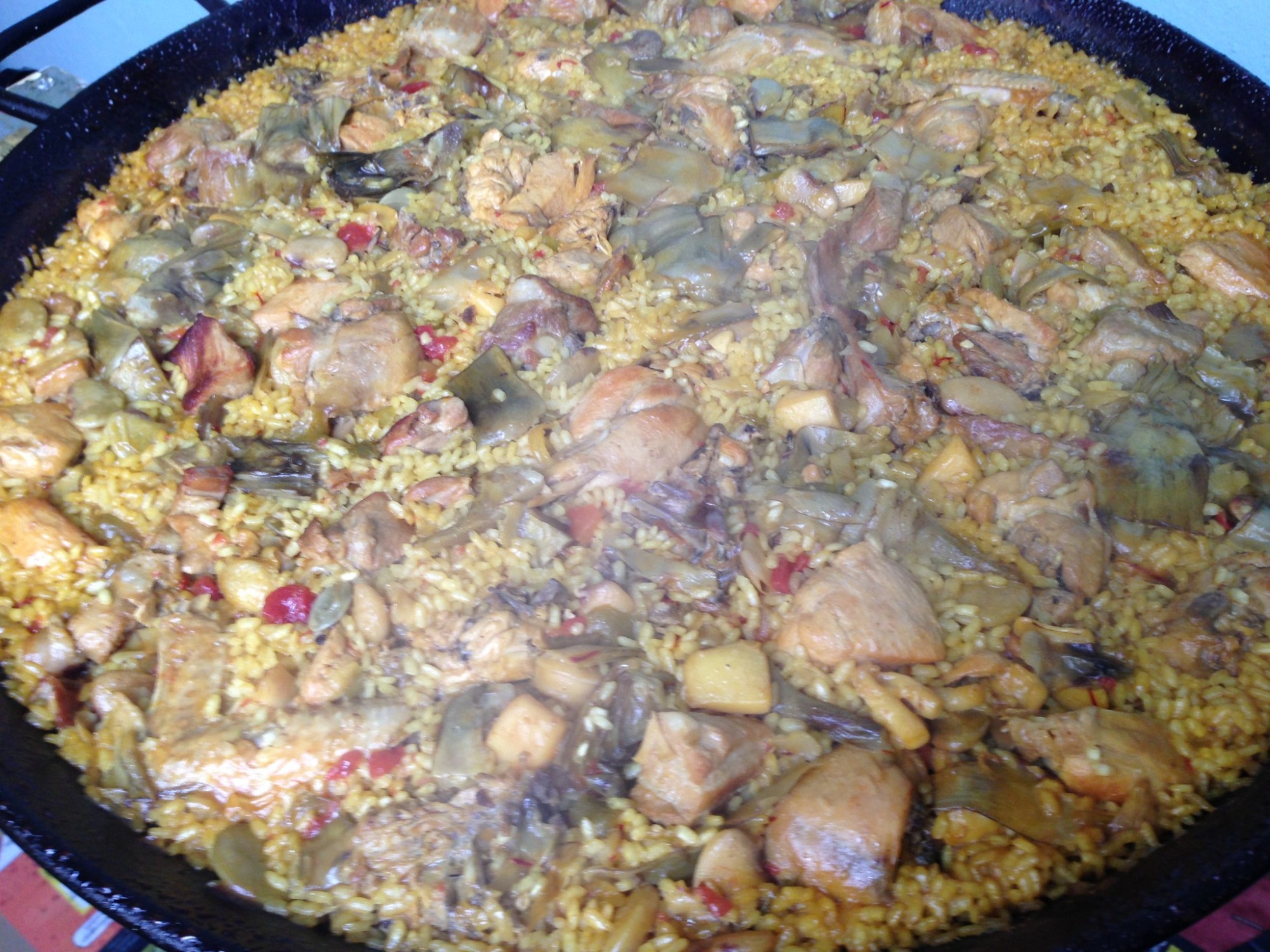
I’ve had the luxury of visiting many towns in the Valencia region since my fiance is Valencian. We are getting married in the area so I wanted to share some insights and things to know about this sunny and vibrant part of Spain. Hope you get to visit the land of paella!
- It’s (almost) always sunny in Valencia: The coast of Valencia is known for it’s sunshine as it’s pretty much sunny 300 days of the year. Occasionally there may be a summer storm or rainy day in the winter, but the people remind me of Californians where everyone is shocked if it starts to rain.
- (A Few) Towns in Valencia: The Valencia Community consists of many cities and amazing sights. I’ve included a few towns below that I’ve been to or on my list to go, but you can view the full list here:
- Valencia
- Morella
- Benicàssim

View of Benicassim on the way to Oropesa - Alicante
- Peniscola
-
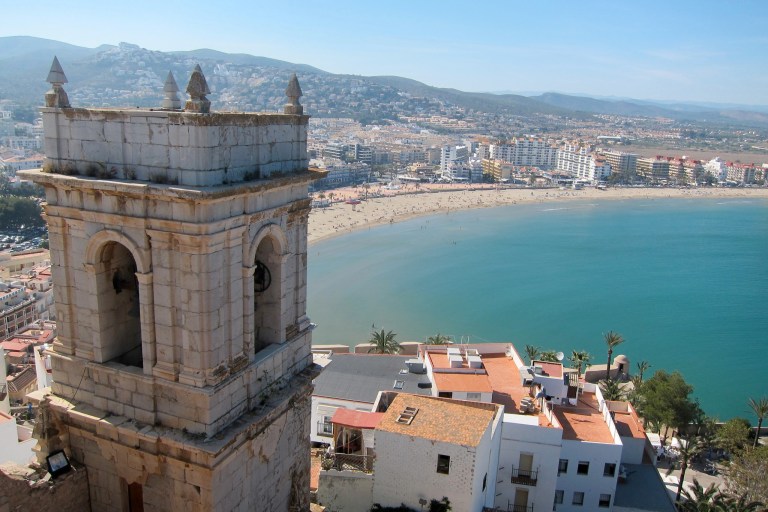
Views from the Peniscola castle Alcossebre
- Altea

View of Altea
- Valencià (the language): The native language is Valencià, which is different from Spanish. There is a lot of controversy on how closely it ressembles Catalan so it’s best to avoid that topic. However, most people you will encounter in the area speak Spanish. You will probably see signs with Valencian, English, and Spanish translations. Here are some Valencian words you may see that would be useful to know (Valencian > English > Spanish):
- Platja > Beach > Playa
- Eixida > Exit > Salida
- Carrer > Street > Calle
- Mercat > Market > Mercado
- Ciutat > City > Ciudad
- Valencia is not part of Catalunya: The Valencian community is south of Catalunya and is its own region. You may upset some Catalans and Valencians if you refer to them as being the same (see the map below for the difference). You can learn more about Spain’s different regions or autonomous communities here.
-
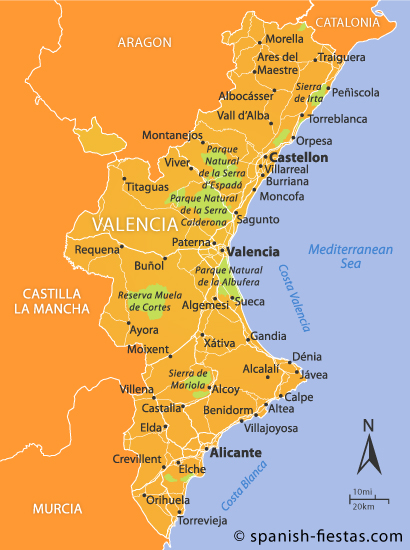
From Spanish Fiestas
-
- Foodie paradise : Valencia is known for its rice dishes, seafood, and citrus. Paella and horchata originated from this region.
- Paella: Valencians take a lot of pride in their paella since it originated in this area. The most traditional Valencian paella is made with meat (typically chicken and rabbit) like the one below.
-
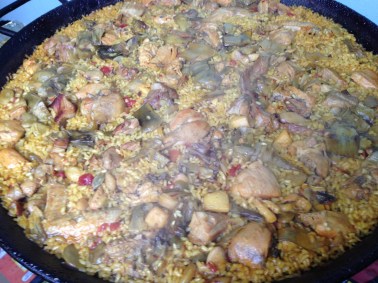
Paella made by SGDF’s dad - Arroz caldoso: Similar to paella but cooked with more broth so it gives it a richer texture. It generally uses seafood.
- Fideuà: Dish that is very similar to paella but instead of rice, it is made with a special noodle and usually with seafood.
- Arròs negre: Made similar to paella but cooked with squid ink (hence why it turns into black rice).
- Marisco (seafood): There are so many amazing seafood dishes but some highlights are sepia (cuttlefish), calamares (calamari – either fried or grilled), shrimp/prawn
- Coques: One of my favorite snacks, this is a pastry that you can find in either sweet versions (made with sugar, apples, almonds, or chocolate) or savory versions (usually made with ingredients such as tomato, tuna, onions, or spinach).
-
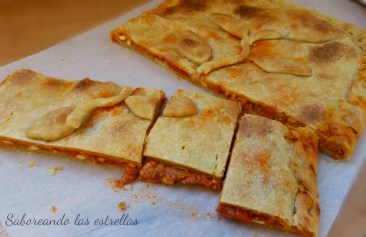
Example of a tomato coca from Saboreando las estrellas Horchata de Chufa y Fartons: Mexican horchata is made with rice, milk, vanilla, and cinnamon, which is very different from the Valencian horchata (orxata in Valencian). Horchata de Chufa (from Valencia) is made from tigernuts, water, and sugar and traditionally served with fartons, which are long pastries you can dip into the horchata. This is a common summer drink in Valencia.
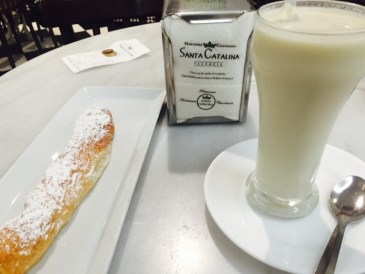
Horchata and a fartó from Santa Catalina in Valencia
- Airports in the area: There are two international airports in this area – Valencia Airport and Alicante Airport. There is a third airport in Castello, which serves several European countries.
- Getting around the region: You can find more detailed instructions (here). There is a pretty well connected train system that runs across Valencia. You can take the Cercanias Renfe for local trips by purchasing tickets at the station. For trips to/from other regions of Spain, you can check out http://www.renfe.com/.
- Valencians love sound and fire: Don’t be alarmed if you hear loud sounds, most likely they are petardos (firecrackers). A mascleta is a popular pyrotechnic event in this region. There is also the famous Fallas festival in March, which in Valencia and many other towns is filled with music, celebration, fire, and loud noises.
- Amazing ceramics: This region is known for its ceramics and porcelain, which gave rise to some companies like Porcelanosa.
- The capital, Valencia: Valencia is the 3rd largest city in Spain and also the capital of the region. I believe it is a must-see if you are in the area since there is so much history, beautiful architecture, and good eats. Here are some highlights of the city:
- Valencia’s River Turia has been transformed into Europe’s largest urban park
- Some believe the Holy Grail, the cup Jesus was supposed to have drunk out of at the last supper, is located in the city of Valencia. You can visit the cathedral in the city and assess for yourself.
- Valencia’s City of Arts and Sciences is not only a popular tourist attract, but also home to scientific research. It was also the site used for George Clooney’s movie, Tomorrowland.
- Beaches – The city is home to some amazing beaches where you can escape the bustling city easily via bus, tram, or bike. Las Arenas is very close to the city center so most likely crowded with tourists and locals. La Malvarrosa is another close favorite, but a bit smaller than Las Arenas. El Saler is the Blue-Flag winning beach located 13 km south of the city and near La Albufera Natural Park.
 Across Oceans & Travels