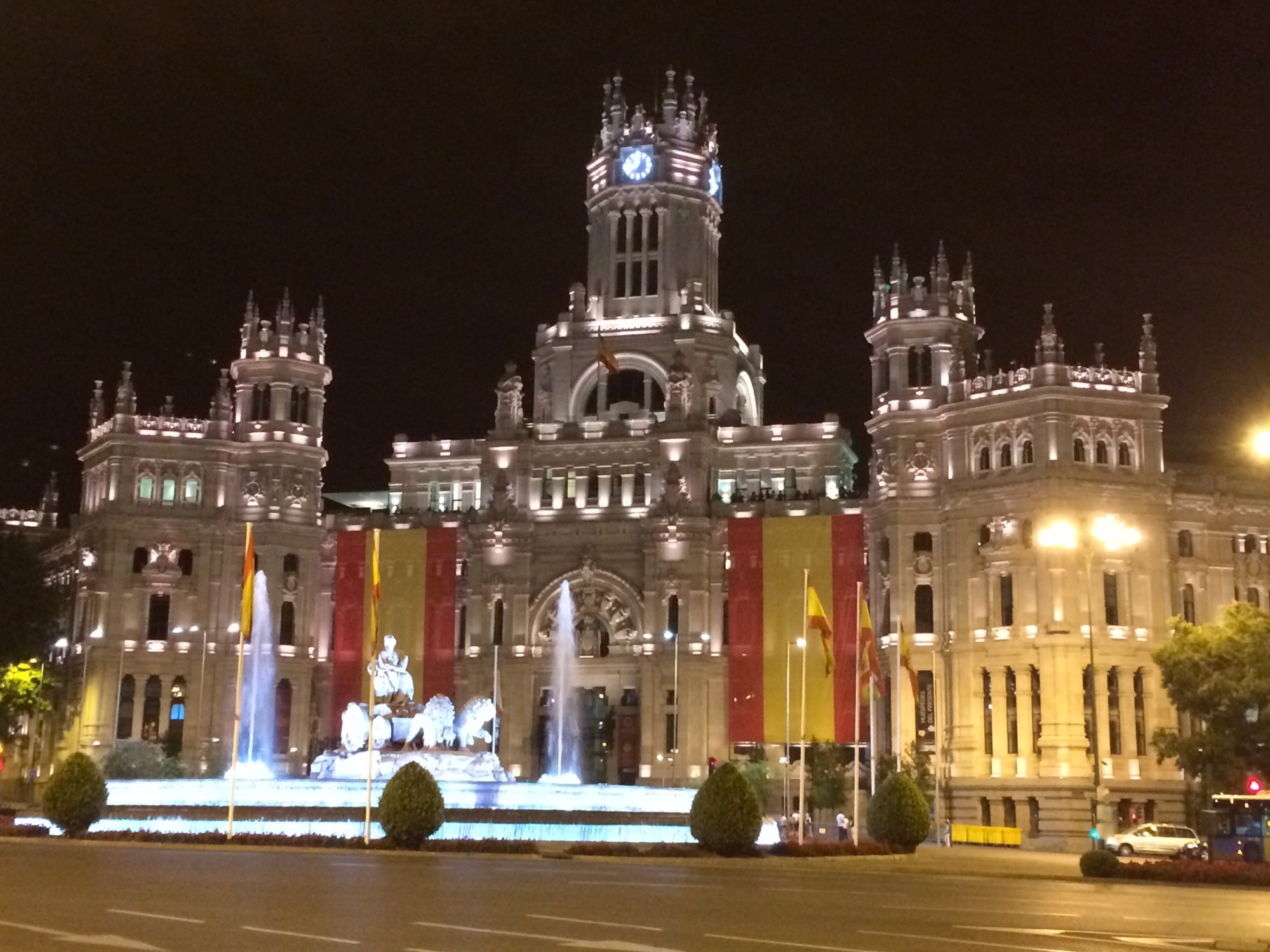
After living in Madrid for 3 months, there are definitely some things that I have learned and things I wish I knew on my previous weekend trips. I have been thinking about the silly things I did, times I got lost and had to do the awkward shuffle-and-backtrack move, and the very kind Madrilenos (Spanish word for the locals) who helped me out. To my future self or to anyone traveling to Madrid, here are some of the things I learned:
- How not to get hit by a car when crossing the street: Wait a few seconds after the signal turns green because cars tend to run the red light (I’ve had some close encounters). Also, if the green man signal starts blinking or if you hear repetitive chirping, then it will turn red soon and again, cars will just go so either stop or start sprinting (I learned this the hard way).
- Should I take the metro or walk?: Depending on where you are coming from / going, it can take either the same amount of time or even less to walk than catching the metro. I recommend walking since Madrid has great weather about 70% of the year (winter can be freezing, for a Californian, and summer is scorching hot) and it’s a great way to explore the city. For reference, click here for the metro map.
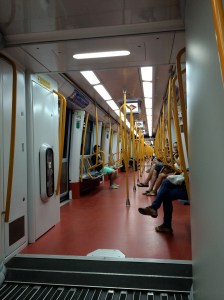
Inside the metro during off-peak hours (it does get crowded, but there is AC!) - Metro 101: You can buy your metro tickets are kiosks in the stations. I would buy either a single ticket or 10-pass.
- Single ticket: Can buy a single ticket to a specific station (can search for the stations on the kiosks). The prices vary based on the distance, this was the best option when taking a one-off ride.
- 10 ticket pass: This option saves a bit of money, time, and is convenient when traveling with friends or visitors.
- Other season passes: There are day passes and other passes based on time frames.
- Other forms of transportation: If you hate walking / need to travel somewhere far, then there are:
- Cercanias (Trains) – 1) Within the city – for instance from Principle Pio to Atocha, 2) Towns outside of Madrid, or 3) Other cities in Spain via the high speed (called AVE) or local trains (Renfe)
- Metro – 1) Within the city, or 2) Nearby towns but Cercanias is usually a better option since the trains are faster
- Buses – 1 ) Within the city, 2) Nearby towns, or 3) Towns outside of Madrid via the buses at the Principle Pio station
- Blablacar – Rideshare, which can make it an inexpensive way to go to other cities in Spain
- Uber / Taxis
- Where to go to buy XYZ: In Spain, there is pretty much a specific store for a specific need, here are a few examples and the name in Spanish:
- Farmacia: Pharmacy, but much smaller than a Walgreens / CVS / Boots. Farmacias tend to be smaller and sell things like medicine, sunscreen, and medical devices.
- Estanco: Tobacco stands where you can also buy metro tickets
- Perfumeria: Perfumes and beauty products (lotions, sunscreen)
- Floristeria): Fresh flowers and arrangements
- Carniceria: Basically a butcher and can purchase meats
- Joyeria (jewelry): Purchase or bring in jewelry and watches for repair
- Pasteleria / Panaderia: Bakery where you can buy pastries and breads
- Fruteria: Purchase fruit, this tends to be cheaper than the large grocery stores
- Pescaderia: Purchase fish and seafood
- Zapateria (shoe store): Purchase shoes
- Grocery shopping: Generally when buying vegetables / fruits, make sure to weigh your items and get the price label before checking. Place the fruit or vegetable on the scale and enter either the product number or search for the product name on the scale, and then place the printed out label on the bag. I also noticed that eggs and milk would be unrefrigerated. Milk is usually in the dairy / beverage aisle, but once you open it, you have to put in the fridge and it will last for ~3 days.
- Store hours: The stereotype is somewhat true about the siestas (naps). Shops tend to closed from 2-5PM for lunch. Also, most stores, including grocery stores and banks, are closed on Sunday.
- Eating times: Eating times vary by region. In Madrid, people generally have breakfast around 8-11AM, lunch around 2-4PM, coffee / snack around 6PM, and dinner around 9-11PM or even later on the weekends.
- Going out times: In Madrid and from what I experienced in the other major cities, people tend to finish dinner around 11PM/12AM if they plan to go out. There are then pre-drinks at a bar or friend’s place usually from 12 to 2AM, and then people go to another bar or the clubs. Most clubs close around 6AM, and the “peak time” is usually around 4AM. It is very common to then get churros for breakfast before heading to bed so prepare for a long night out.
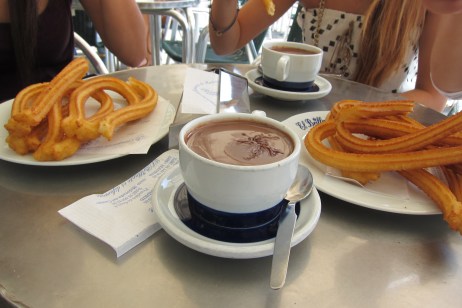
Churros and chocolate (traditional dipping sauce that is not very sweet). If you like fat churros, then ask for “porras”. - Menu del dia: Usually for lunch and on the weekdays, some restaurants offer a “menu of the day” or prix fix and is usually a great bargain. The menu is between 10 and 18€ and includes an appetizer, entree, dessert, a beverage (e.g., wine (sometimes they bring half a bottle), beer, or water), and bread. Lunch is the most important and heaviest meal in Spain so eat lots.
- Where to find cheap movies: On Wednesdays, you can watch the latest movies in Madrid for ~3,90€ (as of Summer 2014). There are 4 theaters that I know of that play the original movie with Spanish subtitles (the majority are dubbed) – Cines Ideal, Cines Princesa, Cines Renoir, Cine Dore (beautiful theater that features old classics).
 Across Oceans & Travels